What are E Numbers?

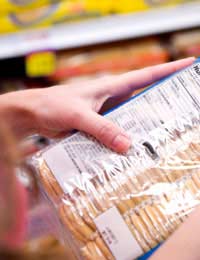
Glance at the ingredients list of pre-packaged and processed foods in a supermarket and the chances are you’ll spot an E number or two listed. But what exactly are these mysterious numbers and why are so many of them in the food and drink on sale today?
E numbers may appear to be a modern element of food, but that’s not necessarily the case. For centuries, people have helped preserve food by adding additional ingredients to foods. For example, onions and eggs can be pickled by adding vinegar and bacon and pork joints are cured (preserved) by adding salt, as well sometimes as molasses and spices. As well as preserving food, additives play other roles too. For example:
- They add colour and improve the look of foods or drinks.
- They add sweetness to foods and drinks.
- They help products gel together or become thicker, which helps improve the look and feel of foods.
- They act as flavour enhancers, to improve the taste of products.
- They’re used to give foods a much longer shelf-life than they’d normally have without it.
Synthesised additives can either be nature-identical or artificial. Nature-identical means that, although the additive is manmade, it has the same chemical composition as a natural substance. Where an additive is artificial, it has a different chemical structure from any naturally occurring substances.
The Birth of E Numbers
In order to keep track of this multitude of additives, the E numbering system was developed and became a legal requirement on packaging in the 1980s. The E in ‘E Number’ stands for European and it means these numbers have been tested for safety and been granted use in the European Union (EU). Some numbers that don’t have a designated E are sometimes allowed to be used in the UK, but may not necessarily have passed the tests are allowed to be used in all EU countries.Each E number is assigned its own unique number. This makes it a lot easier for manufacturers to list which additives are included in foods, as often the chemical names are long and hard to fit on labels, but it also makes it easier for consumers to identify which E numbers are included. It’s easier to remember and look up a three or four digit number than it is a great big unwieldy technical name.
The list and quantity of E numbers used in our foods today has grown extensively. The numbering system helps keep track of what’s what by grouping E Numbers into various categories. For example colouring additives are mostly given numbers 100 – 181, the antioxidants form numbers 300 – 340, flavour enhancers make up numbers 600 – 650 and glazing agents are 900 – 910. As the list grows and more additives are added, other numbers may have to be used.

Re: Dangers and Side Effects of E Numbers
Is this the tip of the iceberg? Can't help thinking we all being slowly poisoned by convenience food. Convenient for…
Re: E200 - E299 Preservatives
Hallo I need advise on what preservetives and ant foaming agents to use for lemon juice. Also reconmondations on how much powders to…
Re: Top E Numbers to Avoid
Since Brexit, I have been adding a few extra E numbers in my products and my sales have boomed! I now sell the tastiest burger in town. E…
Re: E Numbers Not Suitable for a Halal Diet
Is E202 is halal?
Re: Does E631 Use Extracted Pig's Fat or Sardine Oil?
400
Re: E Numbers Not Suitable for a Halal Diet
E140 is a plant product, not derived from meat at all. Please check your facts.
Re: Top E Numbers to Avoid
I was prescribed amitriptyline for anxiety and got on well with the first box of tablets. After starting the second box I began to feel…
Re: E400 - E499 Thickeners, Stabilisers and Emulsifiers
All thickener agent name All emulsifier agents name Cemical use Food use
Re: Top E Numbers to Avoid
You say that E133 is banned in Germany, yet my GP has prescribed Fultium-D/Colecalciferol 800 out capsules with E133 and the Manufacturer…
Re: Does E631 Use Extracted Pig's Fat or Sardine Oil?
In India, there is a law already existing, that any food products having any non-vegetarian ingredients…